
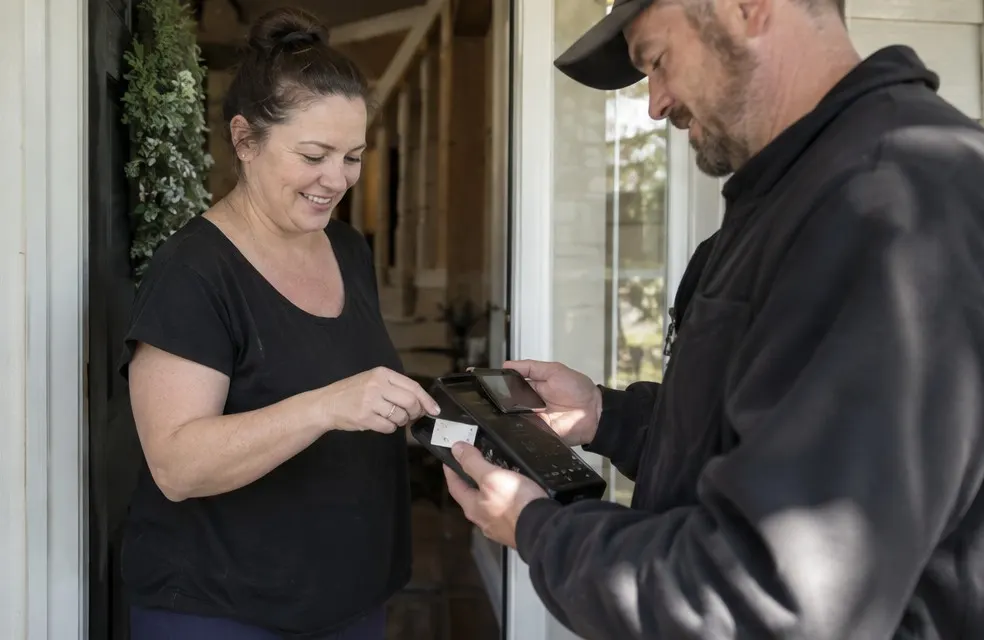
A handyman job is usually one visit. You arrive, you fix it, you leave. The payment should happen in the same visit. Every invoice you send later is a job you might chase for weeks, and for a $180 job, chasing costs more than it is worth.
Make the rule clear before the job
Tell every customer when they book: "Payment is due when the job is done. I take all major cards." Put the same line on your website, your quotes and your booking confirmation. When it is said up front, nobody is surprised at the end.
Send the invoice before you pack up
The best time to invoice is while the customer is looking at the finished job. Walk them through it, then send the invoice from your phone:
- Start from the quote they already accepted
- Add anything extra you agreed on (the extra half hour, the hardware you picked up)
- Send it by text
- They pay by card on their phone while you load the truck
The whole thing takes about a minute. With handyman invoicing software, the invoice is built from the quote so you do not retype anything.
Take cards
Cash and checks feel free, but they are not. Checks bounce, cash needs a bank trip, and both make customers say "I will pay you later" when they do not have it on hand. Card processing usually costs about 3 percent. On a $200 job that is $6, much less than one trip back to collect or one bounced check.
Some handymen add a small card fee; check your state rules first, since some states limit surcharges. Most simply build the cost into their rates.
Deposits for bigger jobs
For jobs over a set amount, or when you buy special-order parts, take a deposit when the customer books:
- 25 to 50 percent for jobs over $500
- The full cost of special-order materials before you order them
This protects you from customers who cancel after you bought a $300 vanity they picked.
Multi-visit jobs
Drywall repair sometimes needs two or three visits for the mud to dry. Either bill at the end of the last visit and say so up front, or split it: half at the first visit, half when done. Do not do three visits and then wait two weeks for payment.
When the customer is not home
Property managers, landlords and busy homeowners often are not there. Agree on payment before the job: card on file, or the invoice paid online the same day. Send photos of the finished work with the invoice; it answers "did they actually do it?" and speeds up payment.
Walk the job before you invoice
Before you send the invoice, walk the customer through what you did: show the patch, open and close the door, turn on the fan. Point out anything you noticed but did not touch ("the caulk around the tub is starting to peel, I can do that next time"). This takes two minutes, heads off complaints, and often books the next job on the spot. Customers who see the finished work pay without hesitation.
Write down your payment terms
Have a short line on every quote and invoice: "Payment due on completion. Cards, Apple Pay and Google Pay accepted. Deposits required for special-order parts." Clear terms in writing make the rare dispute much easier to settle.
If someone does not pay
- Send a friendly reminder the next day
- Call after three days
- Send a final notice after 14 days with a due date
- For larger amounts, a demand letter or small claims court
Then require payment up front from that customer next time. Most handymen who get paid on the spot rarely need any of this.
Why it matters more than you think
Say you do 10 jobs a week at an average of $200. If even two of them pay a week late, you are always carrying $400 or more of your own money. If one in twenty never pays, that is $100 a week, about $5,000 a year, gone. Getting paid on the spot fixes both.
Keep it all in one place
When every invoice and payment is in one list, you know who paid without digging through texts. At tax time, you have a clean record of every job. Pair it with same-day scheduling and a quote the customer saw before booking, and the whole job, from first call to payment, happens in one visit.
Frequently asked questions
When should a handyman get paid?
For most one-visit jobs, when the job is done and before you leave. For larger jobs or special-order parts, take a deposit at booking.
Should a handyman take credit cards?
Yes. Card fees are usually around 3 percent, which costs far less than chasing late checks or making a second trip to collect.